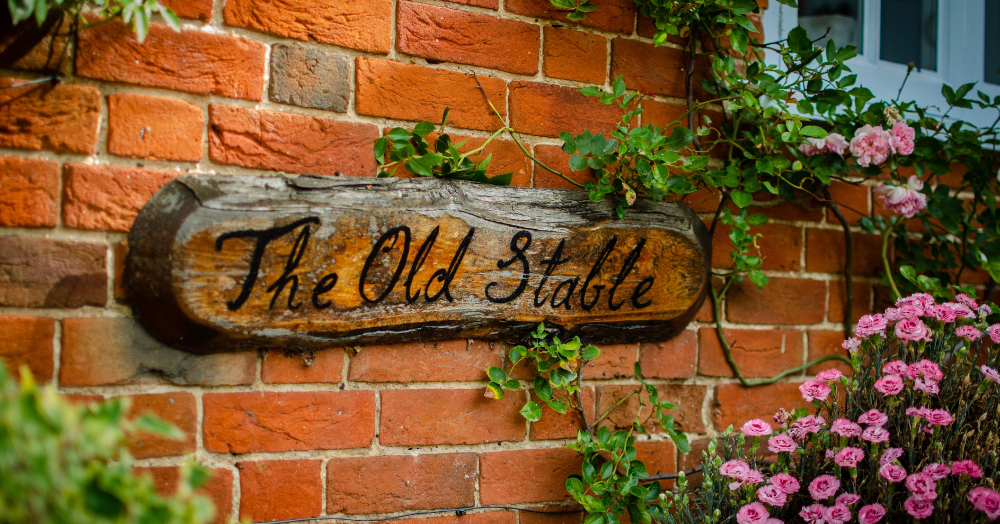
Instantly increase the value of your home without lifting a finger with this top tip
Out of approximately 28 million registered homes in England, most are simply numbered properties. Only 1.5 million of those properties are given names.
When properties were more rural and towns and the population were smaller, there was no need for numbered properties. Named properties were sufficient. But during the 18th century, as more and more homes were built, particularly in streets, numbers were used more frequently.
Typically the left-hand side of the street would be assigned odd numbers, and the right side would be even. The numbering system often starts at the closest point to the centre of the town.
Does a house name add value?
Phil Spencer of Location, Location, Location fame said in an interview with www.thisismoney.co.uk that naming your home can add up to £5,000 to the asking price. Whilst some reports suggest it could be much higher.
Rose cottage sounds much more intriguing than 21 high street. Having a cute name conjures up thoughts of a quaint property with roses around the door. A numbered property reveals no secrets about the property and sparks no curiosity in your mind.
However, an ill-chosen name could detract from the value of your home, reducing the price by up to 20%.
There are often pun names, such as 'Dunroamin' or 'Dunmovin', which is fine unless you are thinking of selling the property, in which case you're neither dunroamin nor movin!
Can I give my house a name?
Yes, you can.
If your property has a number, you don't have to notify anybody, but you do need to keep the number visible, as this is how the property will be identified by Royal Mail and emergency services. You should contact your local council just to let them know.
But if your home already has a name, and you want to change it, you must request it in writing to your local council.
What name can I have?
You can name your house whatever you like, but the name you choose must not be the same or similar to any other in your area.
Some councils charge up to £40 to add a name to your address but check with your local council.
So, what should you go with if you give your house a name? According to House Beautiful, the top 20 house names are:-
- The Cottage
Rose Cottage
The Bungalow
The Coach House
School House
The Lodge
The Barn
Orchard House
The Stables
- Woodlands
Ivy Cottage
Manor Farm
The Willows
Hillside
Sunnyside
The Gables
Hillcrest
Orchard Cottage
Meadow View
The Old Rectory
So, for just £40, you could increase the value of your home by £5,000. And all you have to do is give your home a name!
If you have an unusual name for your home, we'd love to hear more about it.